Experience
A city built on ancient Thebes, with Karnak on one bank and the Valley of the Kings on the other.
Luxor occupies the site of Thebes, capital of Egypt under the New Kingdom. Ancient Thebes and its necropolis have been a UNESCO World Heritage site since 1979.
The city reads either side of the Nile. On the east bank, that of the living, stand the temples of Karnak and Luxor, once linked by an avenue of sphinxes. On the west bank, that of the dead, open the Valley of the Kings, the temple of Hatshepsut and the Colossi of Memnon.
Luxor is also the starting point of Nile cruises towards Aswan, which generally stop at Edfu and Kom Ombo.
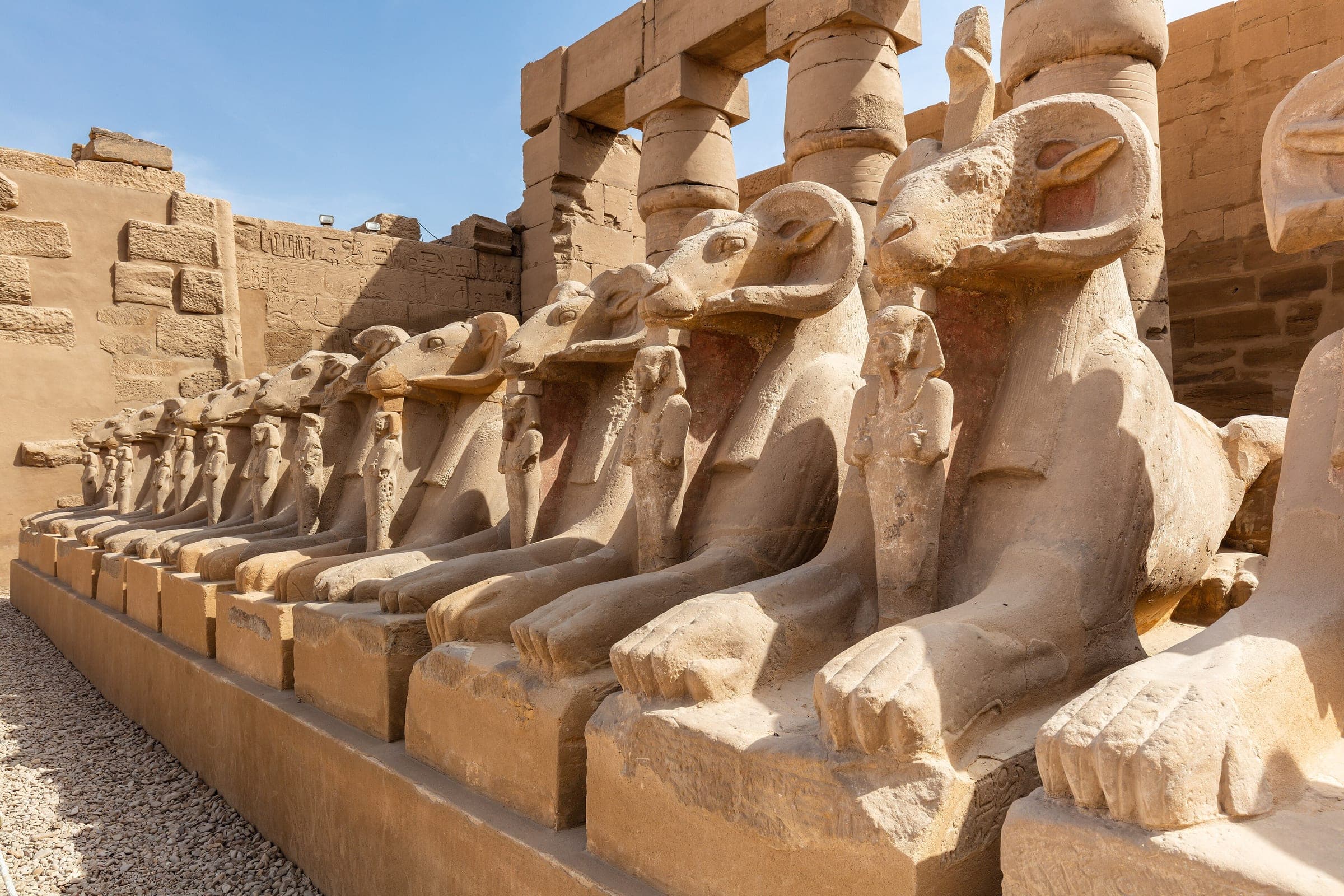
The largest religious complex of ancient Egypt, extended over nearly two millennia.
Tombs cut into the cliff, among them Tutankhamun's.
A terraced temple set against the cliff at Deir el-Bahari.
In the middle of town, particularly fine at the end of the day.
Two monumental statues, remains of a vanished temple.
November to March. In Upper Egypt, summer frequently passes 40 °C and visits are confined to early morning.
It is the simplest way to take in Luxor, Edfu, Kom Ombo and Aswan without driving the same road back. Sailing is by day, visits in the morning.
By domestic flight, a little over an hour. There is also an overnight train, which takes some ten hours.