Experience
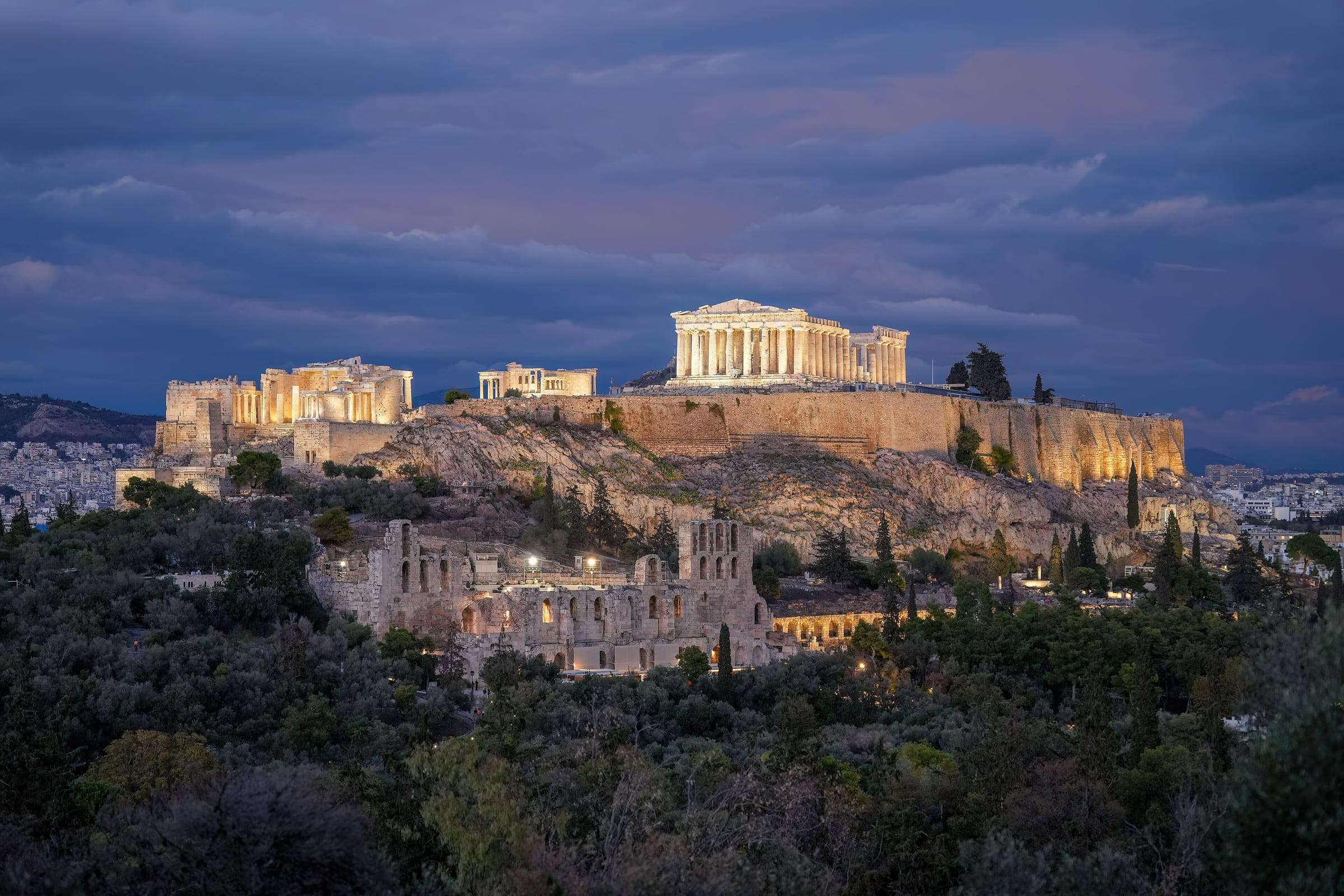
The Greek capital, built around the Acropolis, whose Parthenon has stood over the city since the 5th century BC.
Athens is organised around the Acropolis, a rock spur occupied since prehistory and crowned in the 5th century BC by the Parthenon, under Pericles. The Acropolis has been a UNESCO World Heritage site since 1987.
The old quarters, Plaka and Monastiraki, spread out at the foot of the rock and are covered on foot. The Acropolis Museum, opened in 2009, displays the sculptures from the site just to the south of it.
The city is also the way to the islands: the port of Piraeus, linked to the centre by metro, serves the Cyclades by ferry.
A Doric temple completed around 432 BC, UNESCO-listed.
Opened in 2009, facing the site.
The public square of the city, with the Temple of Hephaestus, among the best preserved in Greece.
The old quarter at the foot of the rock: lanes and tavernas.
The high point of the city, with a view to the Saronic Gulf.
April to June and September to October. July and August are hot and very busy, and the Acropolis site sometimes closes during the hottest hours.
Two days cover the Acropolis, its museum, the Agora and Plaka. That is the length that fits best before going on to the Cyclades.
By ferry from Piraeus, linked to the centre by metro. Santorini is also served by domestic flights, considerably quicker than the boat.