Experience
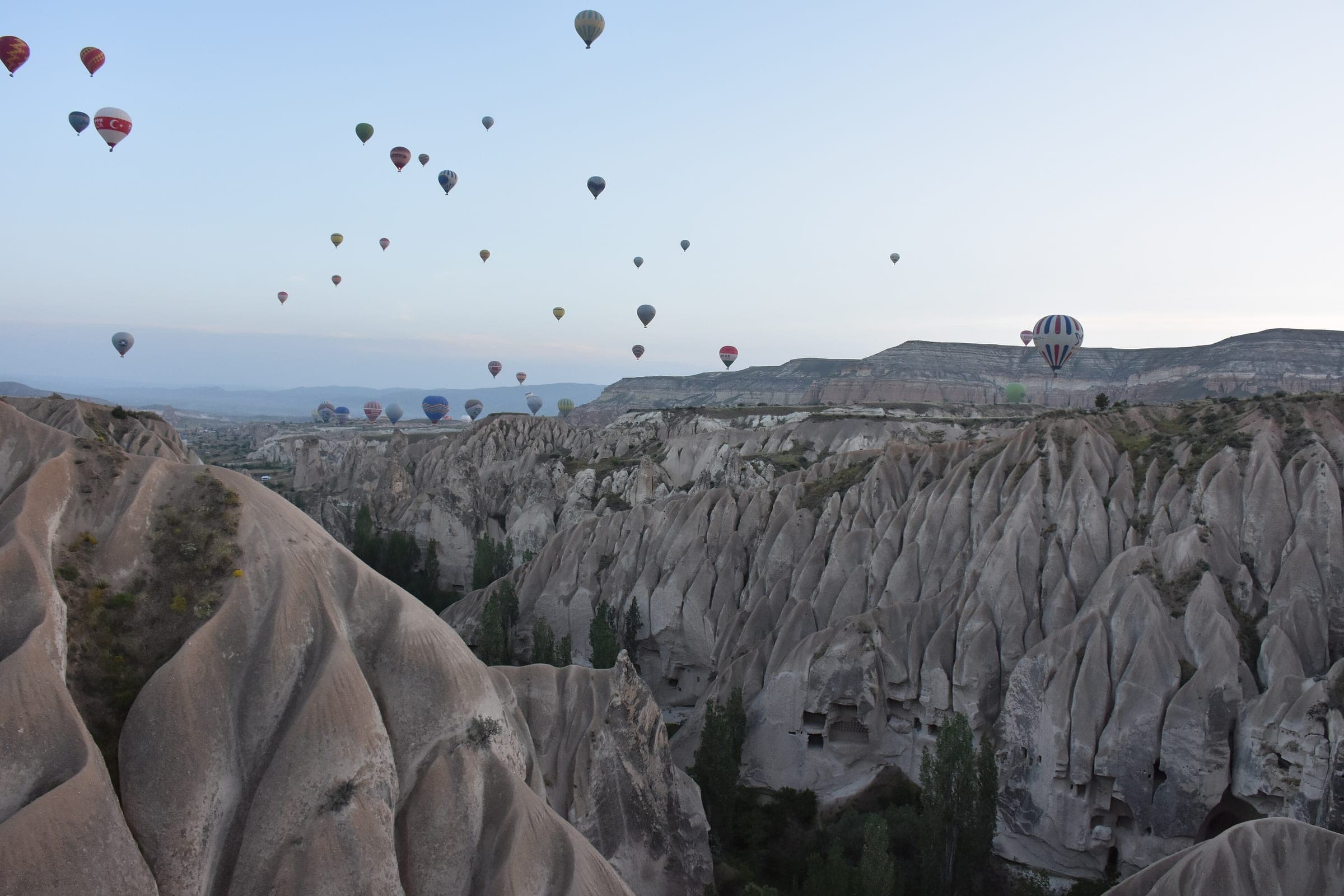
A volcanic plateau in central Anatolia hollowed out into rock churches and underground cities, UNESCO-listed.
Cappadocia owes its relief to ancient volcanic eruptions: the soft tuff was carved by erosion into fairy chimneys, then hollowed out from the inside by the people living there.
Goreme National Park and the rock sites of Cappadocia have been a UNESCO World Heritage site since 1985. The cave churches there still hold Byzantine frescoes.
Underground cities such as Derinkuyu and Kaymakli descend several levels and could shelter thousands of people. The region is reached from Istanbul in a little over an hour's flight, via Kayseri or Nevsehir.
A group of frescoed rock churches, UNESCO-listed.
At daybreak, when the winds are lightest; cancelled when the weather requires it.
An underground city running down several levels.
Short walks among the fairy chimneys.
A village under a hollowed-out rock outcrop, with a view over the whole plateau.
April to June and September to October. The altitude keeps nights cool; winter is cold and snowy, which is spectacular but cancels balloon flights more often.
No, and no serious operator will guarantee it: flights leave at daybreak and are cancelled in wind or poor visibility. Allowing two mornings there markedly improves the odds.
By air, a little over an hour to Kayseri or Nevsehir, then about an hour by road. There is also an overnight bus, which takes some ten hours.